How to Choose a Container Side Loader Trailer: Lifting Capacity, Payload and Site Checks
How to Choose a Container Side Loader Trailer: Lifting Capacity, Payload and Site Checks
A container side loader trailer can combine container handling and road transport in one vehicle. For operators serving customers without lifting equipment, that can solve a practical delivery problem. The purchase decision, however, requires more than comparing advertised tonnage.
Quick answer: Choose a container sidelifter by checking three separate requirements: whether it can lift your loaded container in the intended setup, whether the complete vehicle can legally transport it, and whether the delivery site can support the lifting operation.
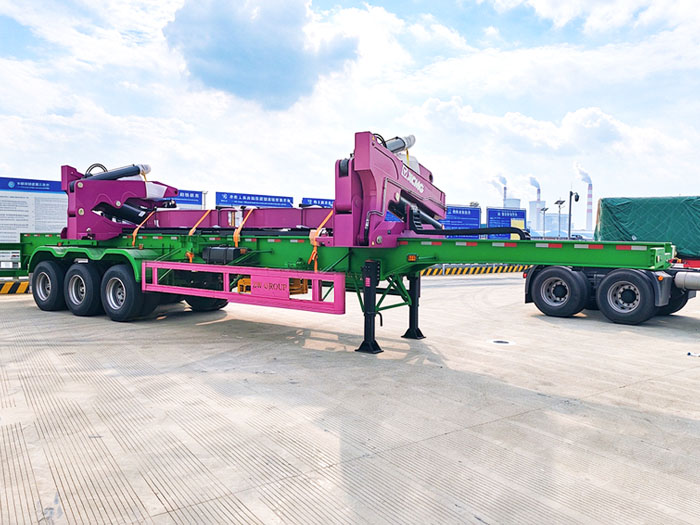
What Problem Does a Container Side Loader Solve?
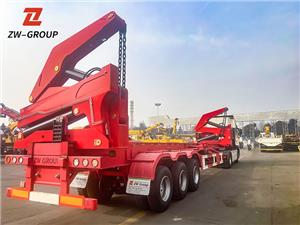
A side loader uses trailer-mounted lifting equipment to move a container beside the vehicle. It can support deliveries where a separate crane or container handler would otherwise need to be arranged. Its usefulness depends on access, suitable ground and sufficient operating space.
The ZW Group 3 axle Container Side Loader Trailer is described as supporting 20ft and 40ft containers. Buyers should confirm that their chosen crane arrangement and container securing system accommodate the sizes they actually carry.
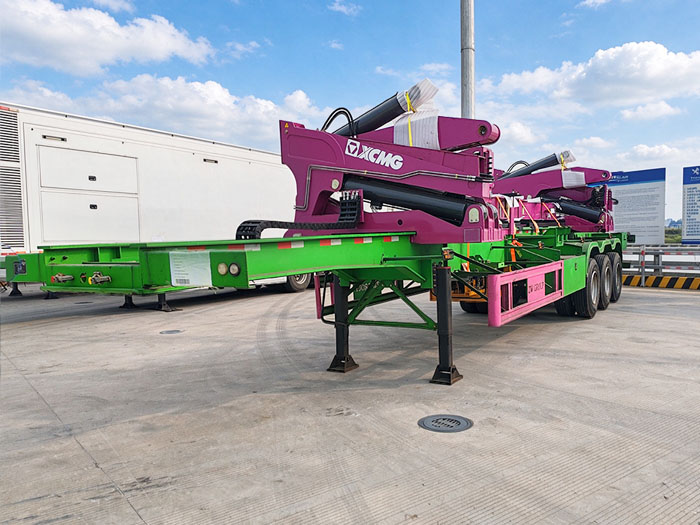
Why Lifting Capacity Is Not Road Payload
Lifting capacity describes the crane's capability under specified conditions. Payload describes the load the vehicle may carry. Trailer weight, approved gross mass, axle-group limits, kingpin loading and destination-country rules all affect that second figure.
ZW Group's published specification illustrates why these ratings need separate checks:
| Rating | Published figure | Buying implication |
|---|---|---|
| Lifting capacity | 40 tons | Verify the applicable crane load chart. |
| Axles | 3 × 13-ton FUWA | Component ratings do not establish legal payload. |
| Maximum gross vehicle mass | 40,000 kg | Confirm its definition and the applicable approval. |
| Maximum rear axle-group mass | 24,000 kg | Check loaded weight distribution. |
| Maximum kingpin mass | 16,000 kg | Confirm tractor and coupling compatibility. |
The useful insight is the difference between nominal axle capacity and the published axle-group limit. Three 13-ton axles add up to 39 tons, yet the listed rear group limit is 24 tons. Adding component ratings would therefore give a misleading transport-capacity estimate.
Illustrative calculation: If 40 tons is confirmed as the permitted loaded semitrailer mass and its measured tare is 12 tons, the mass-based payload ceiling would be 28 tons. The 12-ton tare is hypothetical, not a ZW specification. Axle distribution, tractor ratings and road rules could reduce the usable payload further.
Check the Loading Site Before Ordering
A trailer that suits your container weight may still be unsuitable for a regular delivery location. Survey your busiest and most restrictive sites before selecting the equipment.
Ground support: Establish whether the surface can carry stabilizer reactions. Thin paving, buried services and soft shoulders need assessment.
Operating space: Measure the container position, stabilizer footprint and lifting path, including nearby walls, vehicles and overhead obstacles.
Access: Check the approach, turning area and space needed to align the trailer alongside the container.
Ground slope: Compare measured conditions with the crane manufacturer's permitted operating limits.
Personnel separation: Plan an exclusion zone and a position from which the operator can monitor the lift.
Request a layout drawing for the actual ordered unit. Container clearance alone does not describe the full working envelope. Stabilizer deployment and crane movement must also fit the site.
Ask for a Demonstration That Matches Your Work
A demonstration with an empty container establishes only limited evidence. For a more useful acceptance check, agree on representative container weight, container size, lifting position and ground conditions with the supplier.
Record the container's verified gross weight, crane model, load-chart reference, stabilizer arrangement and complete loading cycle. Measure setup and securing time as well as crane movement. Keep photographs and the signed test record with the vehicle documentation.
For example, a proposed 28-ton container job needs two independent approvals: the lift must fall within the crane's approved operating conditions, and the loaded vehicle must remain within every applicable transport limit. Passing one check does not establish the other.
Compare Side Loader Trailer Price by Cost per Job
Purchase price is only one part of the decision. Compare financing, fuel, maintenance, inspections, operator training and expected downtime with the cost of arranging external lifting for the same deliveries.
A practical starting point is:
Estimated cost per completed job = annual ownership costs ÷ annual completed jobs + variable operating cost per job.
Use completed jobs rather than planned trips. A site that cannot accommodate the side loader may still require hired equipment, reducing the expected savings. Include those exceptions in the calculation before deciding that self-loading transport is economical.
What to Request in a ZW Group Quotation
Give the supplier your container sizes, verified loaded weights, destination, tractor specifications and site measurements. Ask for a configuration-specific proposal rather than a generic capacity statement.
Exact crane model, load chart and operating manual.
Trailer tare weight and approved vehicle mass ratings.
Axle-load and kingpin-load calculations for typical loads.
Container securing details and tractor compatibility requirements.
Inspection documents, training, warranty terms and spare-parts support.
Itemized equipment price, options and shipping terms.
The specification sheet, purchase contract and acceptance record should describe the same configuration. Resolve any differences before delivery.
Frequently Asked Questions
Can the ZW Group side loader handle both 20ft and 40ft containers?
The published product description supports both sizes. Confirm crane positioning, locking arrangements and approved lifting limits for the configuration you order.
Does a 40-ton lifting rating mean a 40-ton legal payload?
No. Lifting capacity describes crane capability under specified conditions. Road payload also depends on trailer tare weight, approved vehicle ratings, load distribution and local regulations.
Can a container side loader work on uneven ground?
Do not assume so. Ground bearing capacity, slope and stabilizer support must meet the specific crane manufacturer's operating requirements.
How can I obtain an accurate side loader trailer price?
Provide container sizes and weights, destination, tractor details and loading-site measurements. Request an itemized quote identifying the crane, chassis, options, shipping terms and included support.
Prepare Your Configuration Request
Send ZW Group your heaviest typical container weight, container sizes, tractor details and delivery-site measurements. Use the resulting load chart and vehicle calculations to assess whether the proposed trailer fits your operation.