How to Choose a 2 Axle 8 Units Car Carrier Semi Trailer for Vehicle Transport
How to Choose a 2 Axle 8 Units Car Carrier Semi Trailer for Vehicle Transport
ZW 2 axle 8 units car carrier semi trailer is a practical solution for vehicle logistics companies, car dealerships, used car exporters and fleet operators that need to move multiple passenger vehicles safely and efficiently. Compared with single-car transport or small rigid trucks, a double deck car carrier semi trailer can improve transport efficiency, reduce cost per vehicle and support regular delivery between ports, warehouses, dealerships and project sites.
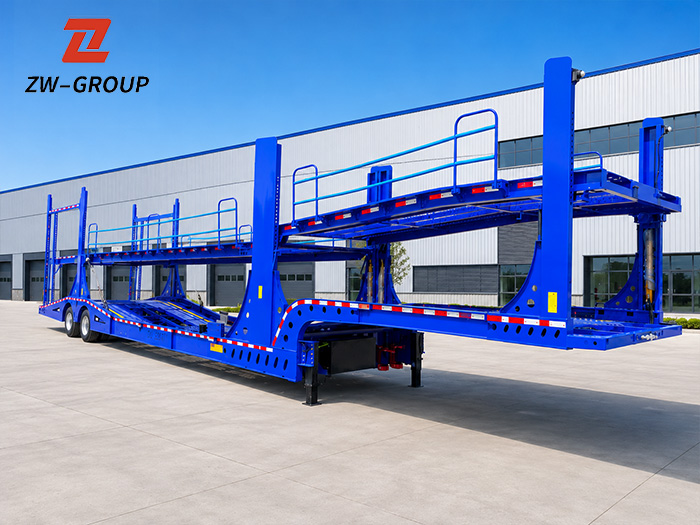
However, not every car carrier trailer is suitable for every market. Road regulations, vehicle size, loading method, axle load, hydraulic system quality and frame strength all affect the final choice. This guide explains the key points buyers should check before purchasing a 2 axle 8 units car carrier semi trailer.
Quick answer: Choose a 2 axle 8 units car carrier semi trailer based on legal loading capacity, deck structure, hydraulic lifting reliability, axle and suspension brand, braking safety, anti-rust treatment, spare parts availability and the manufacturer’s export experience.
1. Confirm Whether a 2 Axle 8 Units Design Fits Your Transport Task
The first step is to confirm the actual vehicles you plan to transport. An 8 units car carrier is usually suitable for sedans, compact SUVs and similar passenger vehicles. If most of the cargo is large SUVs, pickup trucks or vans, the real loading quantity may be lower than eight units because of length, height and weight restrictions.
Buyers should prepare a typical vehicle list before ordering. Include vehicle length, width, height and approximate curb weight. A professional supplier can use this information to recommend a reasonable deck layout and loading angle. This is important because a car carrier trailer must balance capacity, safety and road compliance.
2. Check the Main Structure and Steel Quality
The frame is the foundation of any vehicle transport trailer. A reliable 2 axle car carrier semi trailer should use high-strength steel, reinforced side beams and a stable upper deck structure. The welding quality should be clean and consistent, especially around the main beam, kingpin area, hydraulic support points and ramp connections.
For long-term operation, the trailer should not only carry weight but also resist twisting during loading, unloading and turning. A weak structure may look acceptable when empty but can cause deformation after repeated loading. Buyers should ask for production photos, material specifications and quality inspection details before confirming the order.
3. Evaluate the Loading Deck and Ramp Design
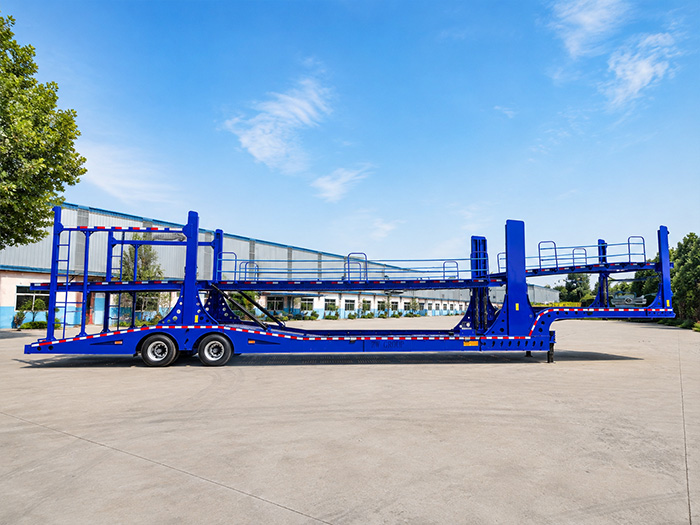
A good car carrier semi trailer should make loading and unloading easier for drivers. The upper and lower decks must provide enough space for safe parking, stable tire contact and secure fastening. The ramp angle should be suitable for low-clearance cars, especially when transporting new vehicles or export used cars that cannot be damaged.
Key deck design points include anti-slip surface, proper wheel stop position, strong ramp hinges, easy operation and enough clearance between vehicles. If the trailer is used in port logistics or dealership delivery, a fast and stable loading process can save working time and reduce labor risk.
4. Choose a Reliable Hydraulic Lifting System
Most 8 units car carrier trailers use a hydraulic system to adjust deck height and loading position. The hydraulic cylinder, oil pipe, control valve and power unit should be selected carefully. A poor hydraulic system can cause oil leakage, slow lifting, unstable movement or difficult maintenance.
When choosing a supplier, ask whether the hydraulic system has been tested under load. The lifting movement should be smooth, and all locking devices should be easy to operate. Mechanical locks are also important because the hydraulic system should not be the only support during long-distance transport.
5. Compare Axles, Suspension, Tires and Brake System
The axle and suspension system directly affect road stability and maintenance cost. For a 2 axle 8 units car carrier semi trailer, buyers should select axles that match local road conditions and loading requirements. Mechanical suspension is common because it is durable and easy to maintain, while air suspension may be preferred in markets that require smoother vehicle protection.
| Component | What to Check | Why It Matters |
|---|---|---|
| Axles | Rated capacity, brand, spare parts | Supports safe long-distance operation |
| Suspension | Mechanical or air suspension | Affects stability and maintenance |
| Tires | Size, load rating, local availability | Reduces downtime and replacement cost |
| Brake System | Air brake, ABS optional, valves | Improves safety under full load |
6. Pay Attention to Vehicle Securing Points
Vehicle securing is one of the most important safety factors in auto transport. The trailer should have enough tie-down points, wheel straps or chain fixing positions. These points must be welded or bolted to strong structural areas, not weak sheet metal parts.
For export transport, buyers should also consider whether the trailer will be used on rough roads, mountain routes or long-distance highway delivery. More secure tie-down positions can reduce vehicle movement, tire damage and body scratches during transport.
7. Check Surface Treatment and Anti-Corrosion Protection
Car carrier trailers often operate in ports, coastal areas and outdoor storage yards. Paint quality and anti-rust treatment are therefore very important. Buyers should check shot blasting, primer, top coat thickness and paint coverage around welds and corners.
If the trailer will be shipped by sea or used in humid regions, stronger surface treatment can extend service life. A low-priced trailer with poor painting may require early repainting and higher maintenance cost.
8. Review Customization Options Before Production
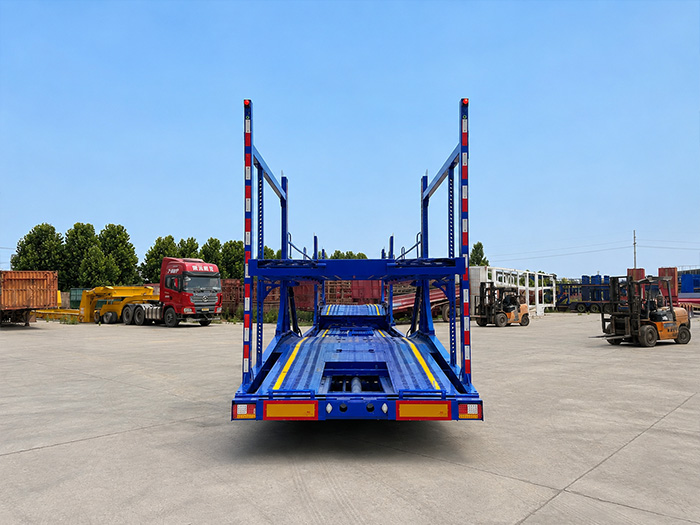
A professional manufacturer should be able to customize the trailer according to the buyer’s market. Common options include overall length, loading deck layout, hydraulic control method, ramp type, suspension type, tire brand, tool box, spare tire carrier, color and logo. For some countries, lighting, side protection, brake configuration or reflective marking may also need adjustment.
Before production, confirm the final drawing, technical specification and loading plan. This helps avoid misunderstandings and ensures the trailer matches the intended transport route and vehicle type.
9. Choose an Experienced Manufacturer
Choosing the right manufacturer is as important as choosing the right specification. A supplier with experience in car carrier semi trailer production can provide better advice on loading layout, structural reinforcement, hydraulic operation and export packing. Buyers should review factory capability, production cases, inspection process and after-sales spare parts support.
ZW Group supplies semi trailers, heavy trucks and vehicle transport solutions for overseas customers. For buyers who need a 2 axle 8 units car carrier semi trailer, the company can provide product configuration support, production photos, quality inspection and export delivery assistance.
Conclusion
A 2 axle 8 units car carrier semi trailer can be a cost-effective choice for professional vehicle transport, but the final performance depends on correct configuration and manufacturing quality. Buyers should not only compare price. They should also evaluate the frame structure, hydraulic system, axle quality, deck design, braking safety, anti-corrosion protection and supplier experience.
For long-term business, a well-built car carrier trailer helps reduce vehicle damage, improve loading efficiency and lower operating cost. Before placing an order, share your vehicle type, route, road regulation and expected loading quantity with the manufacturer to receive a more accurate trailer solution.
Need a 2 Axle 8 Units Car Carrier Semi Trailer?
Contact ZW Group to get technical specifications, loading layout suggestions and a customized quotation for your vehicle transport project.
FAQ
How many vehicles can this trailer carry?
It is designed for up to 8 passenger vehicles, but the actual number depends on vehicle size, weight and local road limits.
Can it transport SUVs?
Yes, but large SUVs may reduce the total loading quantity because they require more deck space and height clearance.
Is the hydraulic system necessary?
Yes. The hydraulic system helps adjust deck position and improves loading efficiency, especially for double deck car carrier trailers.
What information should I provide before ordering?
You should provide the vehicle type, average dimensions, loading quantity, destination country, road regulations and any required customization.