How to Choose a Fuel Tanker Semi Trailer for South America?
How to Choose a Fuel Tanker Semi Trailer for South America?
The demand for fuel transportation in South America continues to grow due to expanding mining projects, agricultural operations, logistics infrastructure, and urban development. Countries such as Brazil, Peru, Chile, Colombia, and Argentina rely heavily on efficient fuel supply chains to support economic activities across long transportation distances. As a result, selecting the right fuel tanker semi trailer has become a critical investment decision for fleet owners, fuel distributors, and transportation companies.
However, choosing a suitable fuel tanker trailer for South American markets involves much more than simply comparing prices. Buyers must consider regional road conditions, fuel transportation regulations, climate variations, axle requirements, tank material options, maintenance costs, payload efficiency, and long-term operational reliability. A poorly selected tanker trailer may increase downtime, fuel consumption, repair expenses, and transportation risks.
This guide explains the most important factors to evaluate when purchasing a fuel tanker semi trailer for South America and helps transport companies make smarter, safer, and more profitable investment decisions.
Understand South American Road and Transport Conditions
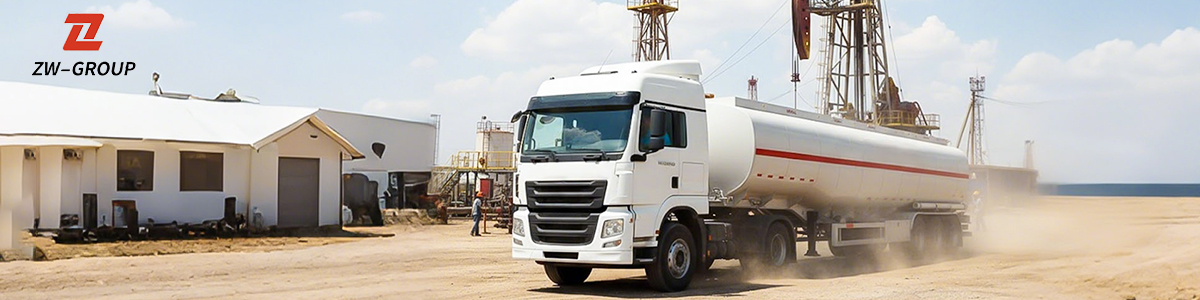
South America has highly diverse transportation environments. Some regions feature modern highways and industrial logistics corridors, while others include mountainous terrain, gravel roads, humid tropical environments, and remote mining routes. These conditions directly affect the design requirements of fuel tanker semi trailers.
Before purchasing a tanker trailer, buyers should carefully analyze:
Average transport distance
Road surface quality
Mountainous or flat terrain
Local climate and humidity
Fuel station infrastructure
Bridge and axle load restrictions
Government transportation regulations
For long-distance cross-border fuel transportation, trailer durability and braking stability become especially important. Heavy-duty chassis structures and reinforced suspension systems help improve operational safety and reduce maintenance frequency.
Choose the Right Tank Capacity
Fuel tanker semi trailers are available in different capacities depending on transportation requirements and legal restrictions. The most common configurations in South America range between 30,000 liters and 60,000 liters.
| Tank Capacity | Application Scenario | Advantages |
|---|---|---|
| 30,000–40,000 Liters | Urban fuel delivery | Better maneuverability and lower road restrictions |
| 45,000–50,000 Liters | Regional transportation | Balanced payload and efficiency |
| 55,000–60,000 Liters | Long-distance industrial transport | Higher transport profitability |
Larger tanker capacity can improve transportation efficiency and reduce fuel delivery frequency. However, excessive capacity may increase road restrictions and affect stability on difficult terrain. Buyers should evaluate operational routes carefully before selecting tank volume.
Select Suitable Tank Material
The choice of tank material significantly affects trailer weight, durability, fuel efficiency, and maintenance costs. The two most common materials are carbon steel and aluminum alloy.
Carbon Steel Fuel Tankers
Carbon steel tanker trailers are widely used because of their affordability and structural strength. They are suitable for companies prioritizing lower initial investment costs.
Advantages include:
Lower purchase price
Strong structural durability
Easy repair and maintenance
Suitable for harsh working environments
However, carbon steel trailers are heavier and may increase fuel consumption over time.
Aluminum Fuel Tankers
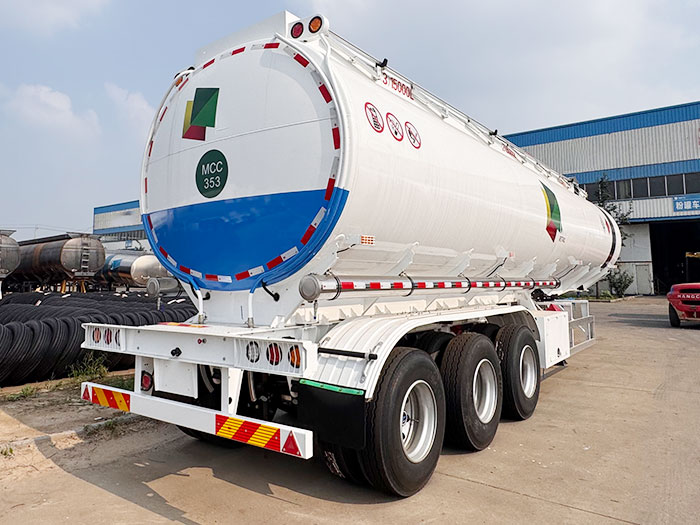
Aluminum alloy fuel tanker semi trailers are increasingly popular in South America because they reduce trailer weight and improve payload efficiency.
Advantages include:
Lighter tare weight
Better fuel economy
Higher payload capacity
Excellent corrosion resistance
Longer service life
Although aluminum tankers typically have higher upfront costs, they often deliver better long-term profitability for fleets operating over long distances.
Evaluate Axle Configuration and Suspension
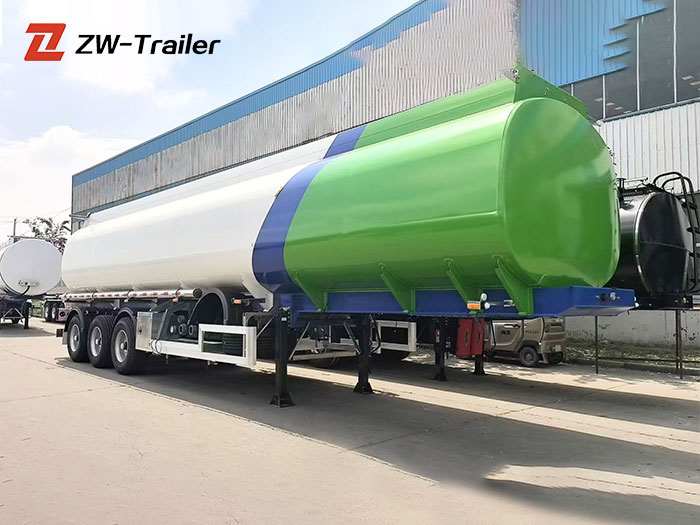
Axle configuration directly affects payload distribution, stability, tire wear, and compliance with local transportation regulations.
Common configurations include:
2-axle fuel tanker semi trailer
3-axle fuel tanker semi trailer
4-axle fuel tanker trailer
Three-axle tanker trailers are the most common option in South America because they provide a strong balance between carrying capacity and maneuverability.
For mining transportation or heavy fuel distribution routes, four-axle configurations may provide better load distribution and reduced axle pressure.
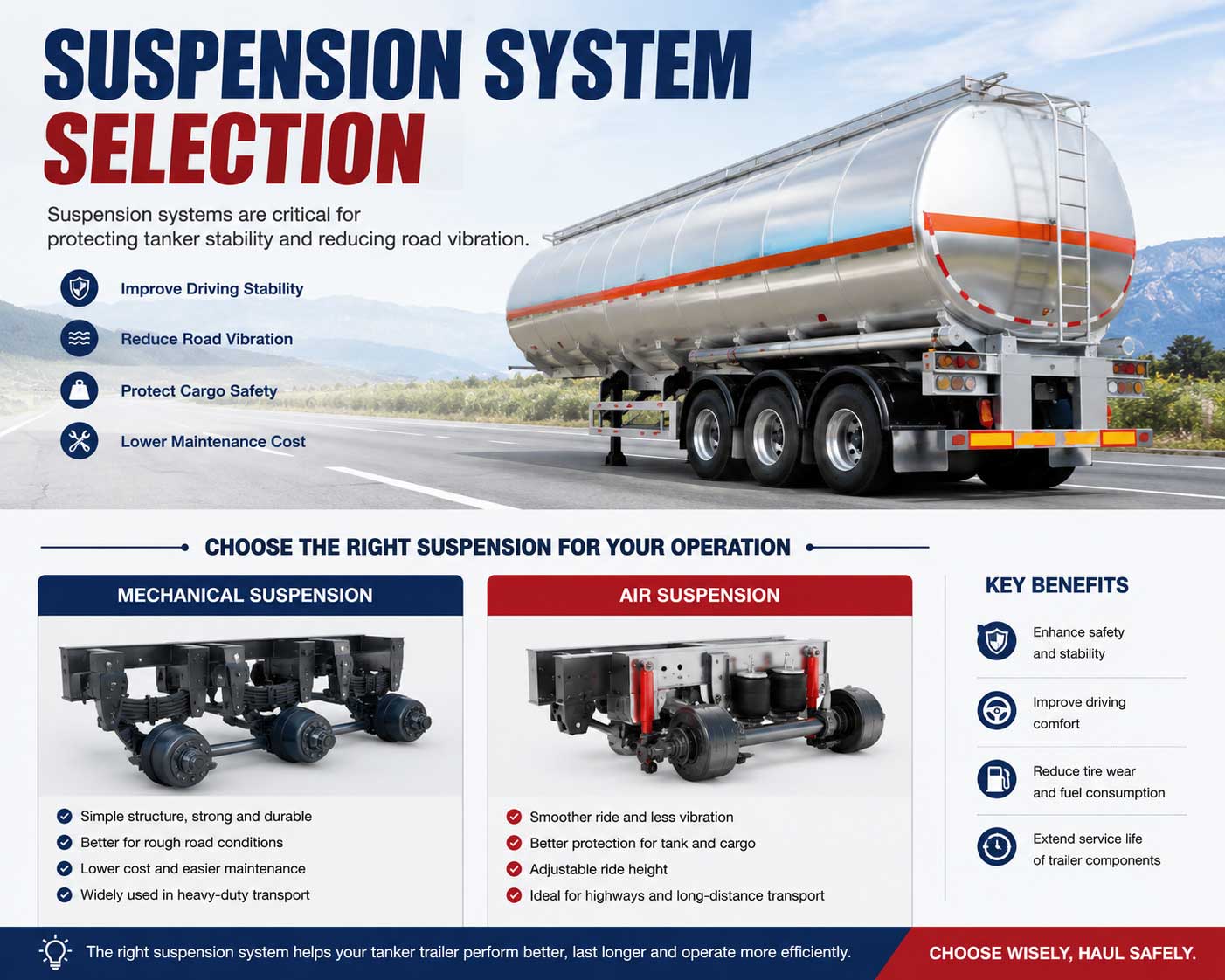
Suspension System Selection
Suspension systems are critical for protecting tanker stability and reducing road vibration.
| Suspension Type | Benefits | Recommended Usage |
|---|---|---|
| Mechanical Suspension | Strong durability and lower maintenance cost | Mining and rough roads |
| Air Suspension | Improved ride comfort and cargo stability | Highway transportation |
Pay Attention to Safety Features
Fuel transportation involves strict safety requirements because petroleum products are flammable and hazardous. Reliable safety systems not only protect drivers and cargo but also help companies comply with international transportation standards.
Important safety features include:
Emergency shut-off valves
Bottom loading systems
Anti-static grounding equipment
Fire-resistant piping systems
ABS braking systems
Rollover protection design
Leak-proof manhole covers
Reflective warning markings
For mountainous South American roads, braking performance is particularly important. Buyers should prioritize high-quality brake chambers, durable axles, and advanced ABS systems.
Consider Climate and Corrosion Resistance
South America includes tropical, coastal, desert, and high-altitude climates. These environments can significantly affect trailer lifespan.
Coastal regions expose tanker trailers to salt corrosion, while humid tropical areas may accelerate metal deterioration. Therefore, anti-corrosion treatment is essential.
Recommended protective measures include:
Sandblasting surface preparation
Polyurethane paint coating
Galvanized components
Corrosion-resistant aluminum structures
Waterproof electrical systems
High-quality surface treatment can extend trailer service life and reduce maintenance expenses.
Evaluate Fuel Efficiency and Operating Costs
Transportation profitability depends heavily on long-term operating costs. Buyers should evaluate total lifecycle costs rather than focusing only on initial purchase price.
Factors affecting operational efficiency include:
Trailer weight
Aerodynamic performance
Tire quality
Brake durability
Maintenance intervals
Fuel consumption
Spare parts availability
A lightweight aluminum fuel tanker may cost more initially but can reduce fuel expenses substantially over years of operation.
Choose a Reliable Tanker Trailer Manufacturer
Selecting an experienced manufacturer is one of the most important decisions when purchasing a fuel tanker semi trailer.
A professional supplier should provide:
Customized trailer solutions
International export experience
Quality certification
Technical support
Spare parts supply
After-sales service
Flexible configuration options
Buyers should also evaluate production capability, welding quality, painting process, axle brands, and steel material standards before placing an order.

Why South American Buyers Prefer Customized Fuel Tanker Trailers
Different South American countries have varying transportation regulations and operational requirements. As a result, customized tanker trailer solutions are increasingly preferred over standard configurations.
Customization options may include:
Multiple fuel compartments
Different discharge systems
Customized suspension
Special tire configurations
Aluminum or steel tank options
ADR or regional compliance features
Toolboxes and safety accessories
Customized tanker trailers improve operational efficiency and ensure better compatibility with local transport regulations.
Conclusion
Choosing the right fuel tanker semi trailer for South America requires careful consideration of road conditions, transport regulations, tank capacity, material selection, suspension systems, operational efficiency, and safety requirements.
For long-distance transportation and demanding industrial applications, durability and reliability are just as important as payload capacity. Buyers who focus on long-term operational value rather than short-term cost savings typically achieve better transportation efficiency and lower maintenance expenses.
Working with an experienced tanker trailer manufacturer can help transport companies select configurations that match regional logistics needs while improving safety, profitability, and fleet performance.
About ZW Group
ZW Group is a professional manufacturer and exporter specializing in semi trailers, heavy-duty trucks, and transportation equipment for global markets. The company provides customized logistics and transport solutions for customers across Africa, South America, Southeast Asia, and the Middle East.
In addition to fuel tanker semi trailers, ZW Group also offers:
Lowboy semi trailers
Container skeleton trailers
Sidewall cargo trailers
Fence cargo semi trailers
Bulk cement tank trailers
LPG tanker trailers
Dump trucks
Water tanker trucks
Sewage suction trucks
Car carrier semi trailers
ZW Group focuses on reliable manufacturing quality, customized configurations, competitive pricing, and international after-sales support to help customers improve transportation efficiency worldwide.
For fuel tanker trailer inquiries, technical specifications, or customized transport solutions, welcome to visit our website: https://www.zw-trailer.net/