Why Your Semi Trailer Price Is $12,000 but You Receive a $10,000 Configuration?
Why Your Semi Trailer Price Is $12,000 but You Receive a $10,000 Configuration?
In the global semi trailer market, especially in Africa, the Middle East, Southeast Asia, and South America, buyers frequently encounter a confusing phenomenon: a low quoted price does not match the delivered configuration. This article explains how “price deception” works, where hidden reductions occur, and how to protect your procurement decisions.
1. The Industry Reality: Low Price Strategy vs True Configuration Cost
In competitive export markets, some semi trailer suppliers use a “low entry price strategy” to attract inquiries. A quote of $12,000 may appear attractive, but the delivered product often reflects a configuration closer to $10,000 or even lower in actual value.
This gap is not always visible at first glance because specifications are described vaguely, and critical technical parameters are not clearly defined in the contract.

2. How “Price-to-Configuration Mismatch” Happens
The most common issue is not fraud in the legal sense, but strategic downgrading of components after order confirmation.
2.1 Steel Thickness Reduction
Main beam thickness reduced from 14mm to 10mm or 8mm
Side beam material replaced with lower-grade steel
Reduced welding reinforcement points
2.2 Frame Structure Simplification
Fewer cross-members in chassis
Lower load-bearing design standard
Missing anti-fatigue reinforcement design
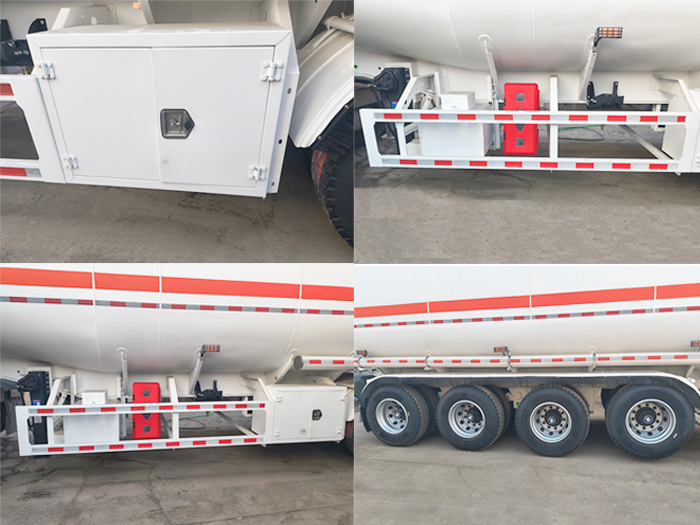
2.3 Tire Brand Substitution
Premium brands replaced with unknown or regional brands
Lower load rating tires installed
Reduced tire lifespan and safety performance
2.4 Suspension System Downgrade
Mechanical suspension instead of air suspension
Reduced axle load capacity
Lower durability under rough road conditions
3. Why This Happens in International Trade
The global trailer supply chain is highly competitive. In markets where buyers prioritize price over specification transparency, suppliers may compress costs to win orders. This is particularly common in developing regions where procurement is often based on initial quotations rather than technical verification.
In addition, some buyers do not require detailed inspection reports or third-party verification, allowing configuration discrepancies to go unnoticed until delivery.
4. High-Risk Markets: Africa, Middle East, and Southeast Asia
Regions with strong infrastructure development demand—such as Nigeria, Kenya, Tanzania, UAE, and Indonesia—are particularly exposed to pricing inconsistencies due to:
Large import volume with limited technical inspection capacity
Heavy reliance on trading companies rather than manufacturers
Pressure to choose lowest upfront price
5. Real-World Procurement Risk Scenarios
Scenario A: Infrastructure Project Delay
A contractor receives trailers with weaker beams than specified. Within months, structural fatigue appears, leading to downtime and financial loss.
Scenario B: Transport Efficiency Loss
Lower-grade suspension leads to frequent breakdowns on rough roads, increasing maintenance costs and fuel inefficiency.
Scenario C: Safety Risk
Incorrect axle load ratings increase the probability of accidents during long-haul transport.
6. How to Detect Semi Trailer Price Manipulation
Request detailed BOM (Bill of Materials)
Ask for steel thickness certification reports
Confirm axle and suspension brand models in writing
Compare weight data with standard industry benchmarks
Require factory inspection photos/videos before shipment
7. Buyer Inspection Checklist
Verified chassis steel grade (Q345B or higher recommended)
Main beam height and thickness confirmation
Axle load capacity certification (13T / 16T standard)
Suspension system type (air vs mechanical)
Tire brand authenticity verification
Welding quality inspection
8. Why Trust Matters in Trailer Procurement
A credible manufacturer must provide:
Transparent technical documentation
Factory production verification
Consistent export case studies
After-sales technical support
9. How to Protect Your Investment
The best protection is not just choosing a lower price, but choosing a verified supplier with transparent manufacturing standards, real export history, and documented configuration control systems.
10. Conclusion: Price Should Reflect Structure, Not Marketing
A semi trailer is not a commodity product—it is a structural engineering asset. A $2,000 price gap often represents meaningful differences in steel, safety, durability, and lifecycle cost. Buyers who focus only on initial price risk significantly higher long-term operational costs.
11. About ZW Group
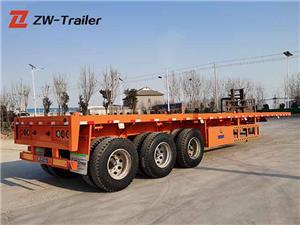
ZW Group is a global supplier specializing in heavy-duty trucks, semi trailers, and construction machinery. The company provides a wide range of transport solutions including flatbed semi trailers, lowbed trailers, fuel tank trailers, dump semi trailers, and container transport equipment.
Beyond semi trailers, ZW Group also supplies complete heavy truck solutions such as HOWO tractor trucks, dump trucks, and specialized engineering vehicles designed for demanding logistics environments across Africa, the Middle East, Southeast Asia, and South America.
With a focus on engineering integrity, export compliance, and long-term customer support, ZW Group aims to reduce procurement risks and deliver consistent quality standards across global markets.
Looking for reliable semi trailers or heavy truck solutions?
Contact our engineering team for verified specifications, factory inspection support, and customized transport solutions tailored to your market.