How to Choose the Right Full Drawbar Flatbed Trailer for Logistics Business (2026 Buying Guide)
How to Choose the Right Full Drawbar Flatbed Trailer for Your Logistics Business (2026 Buying Guide)
Updated: 2026 | Focus: Logistics optimization, fleet efficiency, heavy cargo transport, ROI-driven trailer selection
1. Introduction: Why Full Drawbar Flatbed Trailers Matter in 2026
As global logistics demand continues to rise in 2026, businesses are prioritizing transport solutions that maximize payload efficiency, reduce operating costs, and improve route flexibility. The Full Drawbar Flatbed Trailer has become a preferred solution for mid-to-large logistics operators due to its modular structure, strong load distribution, and cost efficiency.
2. What Is a Full Drawbar Flatbed Trailer?
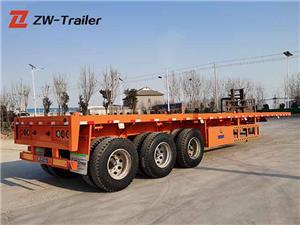
A Full Drawbar Flatbed Trailer consists of a towing unit connected to one or more trailer sections using a drawbar coupling system. This structure allows flexible cargo distribution while maintaining stability during long-haul transportation.
High payload capacity
Flexible modular structure
Suitable for construction, mining, and industrial logistics
Better maneuverability in regional transport networks
3. Key Factors to Consider Before Buying
3.1 Payload Capacity
The first and most critical factor is load capacity. Logistics businesses should evaluate average cargo weight and peak transport demands before selecting a trailer configuration.
3.2 Axle Configuration
Axle numbers directly affect weight distribution, road compliance, and stability. Multi-axle setups are recommended for heavy-duty transport environments.
3.3 Material Strength and Durability
High-tensile steel frames and reinforced cross members are essential for long-term durability, especially in rough terrain or developing infrastructure regions.
3.4 Fuel Efficiency and Towing Performance
A well-designed drawbar system reduces rolling resistance and improves fuel economy, significantly lowering operational costs over time.
4. Cost vs ROI Analysis
While initial purchase cost is important, logistics companies should prioritize long-term ROI. Durable trailers reduce maintenance downtime and increase fleet productivity.
Lower maintenance frequency
Longer service life
Higher cargo trips per month
5. Compliance and Safety Standards
Ensure the trailer meets international road safety and weight regulations. Compliance reduces legal risks and improves cross-border logistics efficiency.
6. Industry Use Cases
Construction material transport (steel, cement, aggregates)
Mining logistics operations
Industrial machinery relocation
Containerized cargo distribution
7. Expert Recommendation
Industry experts recommend choosing trailers based on total cost of ownership (TCO), not just purchase price. Businesses with growing logistics networks should prioritize scalable drawbar systems that allow future expansion.
8. FAQ – Full Drawbar Flatbed Trailer
What is the main advantage of a Full Drawbar Flatbed Trailer?
It provides high payload efficiency and modular flexibility, making it ideal for diverse logistics operations.
Can it be used for international transport?
Yes, if it complies with regional axle load and safety regulations.
Is maintenance expensive?
No, compared to complex semi-trailer systems, drawbar trailers generally have lower maintenance costs.
What industries benefit most?
Construction, mining, agriculture, and heavy industrial logistics benefit the most.
9. Conclusion
Selecting the right Full Drawbar Flatbed Trailer in 2026 requires a balance between capacity, durability, compliance, and long-term ROI. Businesses that invest in optimized trailer systems gain a strong competitive advantage in logistics efficiency and cost control.